Home » Services » Cataract Surgery
Cataract Surgery
Dr. Reena Patel at Wichita Vision Institute specializes in cataract surgery and can help eliminate any cloudiness and dimming of colors caused by the growth of a cataract. Cataract surgery is a safe and effective way to restore vision to its previous clarity. If you would like to know more about the signs and symptoms of cataracts, and discuss our extensive options for cataract surgery please contact our office at 316.773.6400 or email us any time at info@wichitaeyedoc.com.
What is a Cataract?
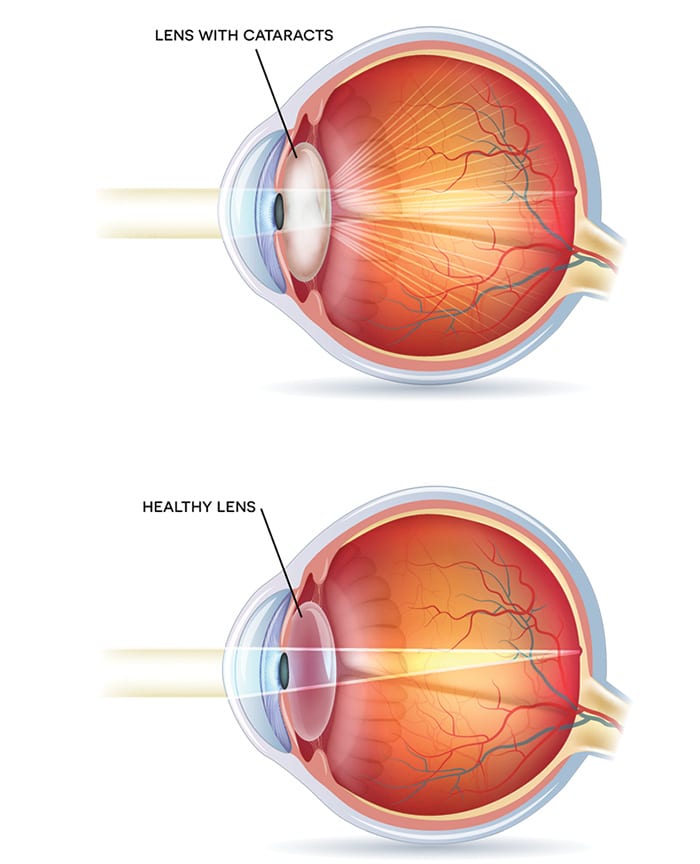
A cataract is the clouding of the eye’s natural lens. The lens is a clear structure inside the eye that helps focus light on the retina, the light-sensitive tissue in the back of the eye. Our natural lens is surrounded by a special capsular bag that helps it change shape to focus, and to hold the lens in place. As a cataract develops, the lens becomes cloudy or opaque, which can interfere with vision. It is time to consider cataract surgery when vision becomes impaired to the point that it begins interfering with daily life. This can include things like driving, especially at night or in low-light conditions, difficulty filling out forms, trouble completing near-vision activities such as reading, playing cards, knitting, carpentry, etc.
What Causes Cataracts?
Let’s change that text to say: Aside from aging and genetic predisposition, cataracts can be caused or worsened by a number of other factors. Cataracts can be associated with eye injuries, injections, inflammation, or steroid use (ocular or other). Certain systemic diseases such as diabetes also increase the risk of cataract development. In addition, environmental factors such as smoking, radiation, and sun exposure can contribute to the growth of cataracts. Cataracts develop in most adults as a natural part of the aging process and can begin forming as early as your thirties or forties. According to the National Institute of Health, cataracts are the leading cause of blindness in the world. By age 80, over half of the people in the United States either have a cataract or have had cataract surgery. Over 3,000,000 cataract surgeries are performed every year in the United States. Cataracts are a very common vision problem, but fortunately surgery can help eliminate the signs and symptoms that make day to day life difficult and help restore your sight!
What are the Symptoms of Cataracts?
Cataracts can cause visual symptoms such as:
- cloudy or blurred vision
- glare
- halos around lights
- difficulty reading or driving
- double vision
- colors seeming washed out or dull
- needing more light to read
- difficulty with night vision
- difficulty with depth perception
- frequent changes in your glasses or contact lens prescription
Cataracts cause a deterioration of vision over time. In most cases, cataract surgery can be safely postponed until you feel your vision and daily life is being impacted. If you begin to experience symptoms of cataracts, you should be evaluated by your ophthalmologist. Your ophthalmologist can help you determine if it is time to consider cataract surgery.
During cataract surgery, the natural lens affected by the cataract is removed and replaced with an artificial, man-made intraocular lens (or IOL) to help restore clear vision. Dr. Reena Patel is a talented surgeon who has performed thousands of cataract surgeries of the lifetime of her career.
Dr. Reena Patel will determine whether cataract surgery is appropriate for you and which intraocular lens would best suit your needs during your in-depth pre-operative exam. Various measurements of your eye length and shape will be taken at that exam. After these measurements have been performed, Dr. Patel will discuss what options are available to you. Intraocular lens choices depend on several factors, including your visual needs, your current prescription, if you have astigmatism and how much astigmatism is present, the importance of having clear night vision, and whether you would prefer to wear glasses or contact lenses after surgery. After an in-depth discussion, you and Dr. Patel will determine the best course of treatment, which may include cataract surgery and your best intraocular lens option. Learn more about intraocular lenses on our intraocular lens web page.
Cataract Surgery
Dr. Reena Patel performs her cataract surgeries at Ridgewood Surgery and Endoscopy Center, a state-of-the-art surgical facility located in northwest Wichita, close to K-96 and North Ridge Road. Ridgewood provides patients with excellent personalized attention and superb medical care. This modern facility is one of the newest surgical centers in Wichita, providing the latest surgical technology to its patients.
Cataract surgery lasts about 20 minutes on average. Mild IV sedation is given to help you relax. Some patients sleep through the entire cataract surgery. Anesthetic eye drops are administered to numb the surface of the eye. An anesthetic solution is also placed in the eye to minimize any discomfort. During the surgery, Dr. Patel will make several small incisions in the cornea. She will then make a round opening in the bag that holds the cataract. She then directs pulses of high-frequency ultrasound energy at the clouded lens to break it into small pieces. These pieces are removed from the eye using gentle suction.
Dr. Reena Patel will place a folded-up intraocular lens (IOL) through the same incision and then position it in the eye. After the IOL has been properly positioned, Dr. Patel will close the incision and place a protective shield over the eye.
Cataract Surgery Recovery
Immediately after your cataract surgery, you will relax in a recovery suite for a short time, and then you will need to have a companion drive you to our office. The vision care team at Wichita Vision Institute will provide you with detailed post-operative instructions and Dr. Patel will also perform a post-operative check at that time.
You will be asked to use special eye drops to promote healthy healing for about a month after surgery. Also, you will need to wear an eye shield while sleeping and special sunglasses in bright light for at least the first week after surgery. For the first week of your recovery, you should avoid eye make-up, strenuous exercise, bending, heavy lifting, or getting water, dust, or dirt in your eye. It is critical that you avoid rubbing your eye during the healing process. Our team will schedule several follow-up visits for you as needed during the first weeks and months after surgery.
Your vision may be blurred for a few days or weeks after your cataract surgery. Most patients who undergo cataract surgery are able to resume their normal daily routine one week after their procedure. If you experience pain, loss of vision, or redness, please contact our office as soon as possible. Otherwise, enjoy your newly improved vision!
New research from Australia has confirmed that patients who undergo cataract surgery live longer! A study that compared people over the age of 49 who have cataract-related vision loss and have cataract surgery to correct this, and those similarly-aged who have the same type of vision loss, but did not have the surgery. The study found that the patients who had surgery had a 40 percent lower long-term mortality risk.
For more information about cataract surgery or IOLs, please contact our practice by phone at (316) 773-6400, or by email. We are happy to answer any of your questions or provide more details about what you can expect with cataract surgery.